The question comes up in almost every tongue tie conversation: “Do I really need to do myo before AND after the release? Isn’t the release enough?”
Short answer: the release is rarely enough on its own. If you’ve ever had a patient whose symptoms returned six months after a frenectomy, or whose family came back frustrated that nothing seemed to change, you already know this. The missing piece is almost always the myo.
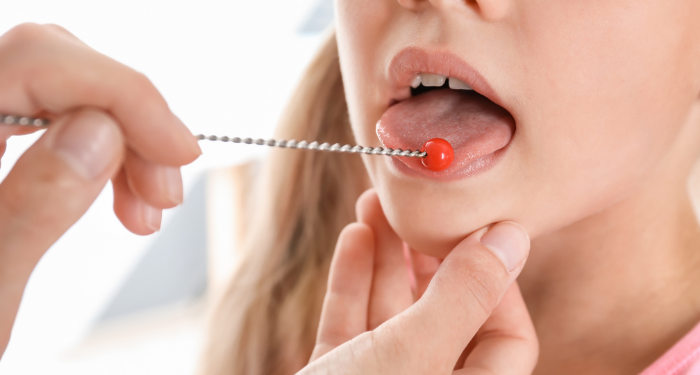
Why Frenectomy Alone Is Not Enough: The Case for Myofunctional Therapy
A tongue tie is a restriction. The frenectomy removes that restriction. But the muscles don’t automatically know what to do with their newfound freedom.
Think about it this way. If someone has been walking with a cast on their leg for years, taking the cast off doesn’t instantly restore normal gait. The muscles have compensated, developed alternative movement patterns, and in some cases weakened from underuse. The same thing happens with the tongue.
When a tongue has been restricted, whether since birth or for years, the surrounding muscles have adapted. The tongue may have learned to push forward instead of elevate. The lips may have developed compensatory patterns. Nasal breathing may never have been established. The swallow pattern may be entirely dysfunctional.
A frenectomy removes the structural barrier. Myofunctional therapy rebuilds the function. You need both.
What Pre-Frenectomy Myofunctional Therapy Actually Accomplishes
Pre-release myofunctional therapy serves a specific purpose: it prepares the neuromuscular system for what’s coming.
When you begin myo work before the release, you’re establishing oral awareness. Many patients, especially young children, have very limited awareness of where their tongue is and what it should be doing. You can’t retrain a movement pattern someone has never consciously experienced.
Pre-release myofunctional therapy also strengthens the muscles that will carry the load post-release. If the tongue is going to be asked to elevate, lateralize, and engage in normal swallowing patterns after the frenectomy, those muscles need baseline capacity before you get there.
And practically speaking, pre-release myo helps the provider performing the release understand the functional picture, not just the anatomical one. A patient who has done even four to six weeks of pre-release myo typically has better outcomes than one who walks straight from diagnosis into procedure.
Post-Frenectomy Myofunctional Therapy: The Timeline Most Clinicians Get Wrong
The first two weeks post-release are about wound care and scar tissue management. Active stretching of the release site is critical during this window to prevent reattachment, and the specific protocol should come from the provider who performed the release. Your role as the myo therapist is to support compliance, answer questions, and monitor.
From weeks two through six, begin gentle functional work. This is not the time to load the system with a full myo exercise program. Establish nasal breathing patterns, oral rest posture awareness, and very gentle tongue elevation work. Slow is fast here.
From six weeks onward, progressively build the full myo program: swallow retraining, lip seal exercises, tongue elevation and lateralization, and functional integration into daily activities.
The most common mistake: jumping straight into a full exercise protocol the week after the release because the family is eager and asking for homework. That eagerness is great. The timing is not.
A Complete Pre and Post Frenectomy Myofunctional Therapy Protocol
A complete frenectomy myo protocol includes three distinct phases:
Phase 1: Pre-Release Myofunctional Therapy (4 to 8 Weeks)
Oral awareness work, baseline strength building, nasal breathing establishment, parent/patient education, and functional assessment documentation to share with the releasing provider.
Phase 2: Early Post-Release (Weeks 1 to 6)
Wound care support, gentle functional reintroduction, compliance monitoring, and scar management guidance.
Phase 3: Full Rehabilitation (Weeks 6 to 24+)
Progressive myo exercise program, swallow retraining, speech carryover if applicable, nasal breathing habituation, and discharge planning with clear functional outcome measures.
The total timeline varies significantly based on age, severity of restriction, and how long compensatory patterns have been established. An infant released in the first weeks of life has a very different trajectory than a ten-year-old who has been mouth breathing for years.
Post-Frenectomy Healing: What to Monitor as a Myo Clinician
Part of your clinical role post-release is monitoring healing, even if you didn’t perform the procedure.
Signs that healing is progressing well:
- The site is blanching appropriately with stretches
- The tongue is gaining mobility
- The patient reports less sensitivity around the release site week by week
- There is no excessive scar tissue formation
Signs to slow down and communicate with the releasing provider:
- The site appears to be reattaching
- The patient is reporting increased pain with exercises beyond the first week
- The tongue mobility has plateaued or regressed
- The family has stopped doing stretches and the site looks contracted
Your documentation of these observations is part of the interdisciplinary communication that makes the whole process work.
Not Sure Where to Start With Tongue Ties? This Is Your First Step.
Doing this work well starts with a solid foundation. Before you can run a pre and post frenectomy myo protocol with confidence, you need to be able to accurately identify tongue ties, assess both form and function, and communicate your clinical reasoning clearly to parents and the rest of the care team.
That’s exactly what the Tongue Tie Bootcamp covers. In one hour, you’ll build foundational knowledge across three areas:
- Understand anatomy, signs, and symptoms, including the ones that are easy to miss.
- Learn to evaluate both form and function so you can assess accurately and refer or collaborate with confidence.
- Navigate conversations with parents and providers, including the skeptics, using evidence-based language that actually lands.
If you’re working with tongue tie patients and the myo piece feels unclear, that’s a signal. Not a signal that you’re a bad clinician, a signal that you need a structured training pathway that takes you through the full protocol. Join the Tongue Tie Bootcamp Today!