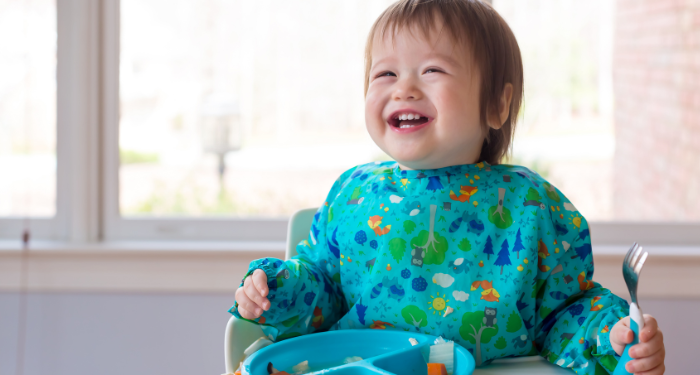
Let’s talk about the three things parents ask about the most—and get the most conflicting information about: pacifiers, bottles, and sippy cups.
Every pediatrician has an opinion. Every lactation consultant has an opinion. Grandma definitely has an opinion. And somewhere in a Facebook parenting group right now, someone is getting advice from twelve strangers at once—all saying something different.
As a feeding therapist, you’re the person in this child’s life who understands how these tools impact oral development. That’s why knowing the pacifier bottle weaning oral development timeline matters. Let’s get clear on the timeline, what the evidence says, and what to tell families when they ask.
Why These Tools Matter Clinically
Pacifiers, bottles, and sippy cups are not neutral objects. Each one:
- Places different demands on oral motor function
- Creates different patterns of oral rest posture and tongue position
- Can contribute to changes (when used beyond its developmentally appropriate window) in craniofacial development, speech sound development, and feeding function
That doesn’t mean any of them are inherently bad. It means they all have a time, a purpose, and a window. Your job is to know those windows and communicate them clearly.
The Pacifier Timeline
Birth to 6 Months
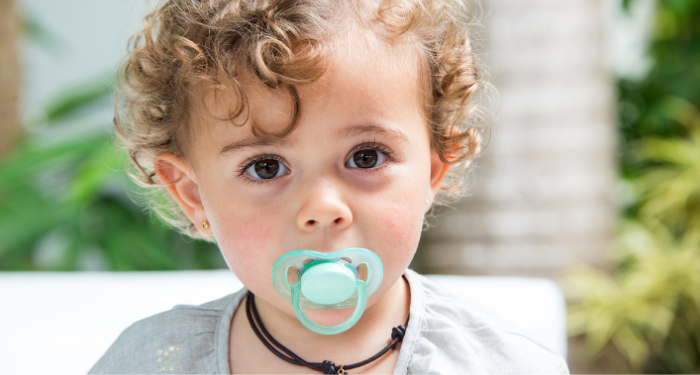
Pacifier use in early infancy is well-supported. It satisfies the non-nutritive sucking need that is entirely normal and developmentally appropriate in the first few months of life. For breastfeeding families, the general recommendation is to wait until breastfeeding is well established — typically around three to four weeks — before introducing a pacifier to avoid interference with latching.
From a feeding therapy perspective, the pacifier should be:
- An appropriate size for the child’s oral cavity
- Firm enough to require active sucking
- Not used as the first response to every form of infant distress
An infant who is always pacified isn’t necessarily learning to regulate in other ways.
6 to 12 Months
This is where pacifier use starts to become a clinical consideration. Between six and twelve months, the child is developing more complex oral motor skills — lateral tongue movement for mashing, rotary chewing patterns emerging, active exploration of the oral space. Extended pacifier use during this window, especially during waking hours, can interfere with that oral exploration and reduce the oral proprioceptive input the child needs.
The general guidance: pacifier use during this period is best limited to sleep times and specific soothing contexts. If a child is using a pacifier as an all-day oral habit during peak developmental months, that’s worth a gentle conversation with the family.
12 to 24 Months — The Weaning Window
Most professional organizations, including the American Academy of Pediatrics and the American Academy of Pediatric Dentistry, recommend discontinuing pacifier use by 12 to 18 months, and certainly by age two.
From a feeding therapy standpoint, the reasons are structural as much as dental. Extended pacifier use is associated with changes in palatal arch shape, tongue resting posture, and oral rest position that can affect both feeding function and speech development. By 12 months, the child has the developmental resources to soothe in other ways.
For families who are resistant, validating the attachment is appropriate; then shift the frame: it’s not about taking something away, it’s about their child’s oral development having outgrown the tool.
The Bottle Timeline
Birth to 6 Months
For bottle-fed infants, the choice of bottle and nipple matters more than most parents realize — and more than most clinicians are trained to discuss. Flow rate is the key variable.
A nipple with a flow rate that is too fast doesn’t allow the infant to regulate their own intake. It essentially feeds for them, bypassing the suck-swallow-breathe coordination that is building oral motor competence in the first months.
Appropriate flow rate for a young infant allows for a rhythmic, organized suck pattern — typically a burst of eight to ten sucks followed by a pause to breathe and swallow. If the infant is gulping, coughing, losing significant liquid from the corners of the mouth, or showing signs of distress during feeding, flow rate is the first variable to evaluate.
6 to 12 Months — Beginning the Transition
This is when cup introduction should begin, ideally with an open cup or a free-flow straw cup rather than a hard-spouted sippy. The bottle doesn’t need to disappear during this window — most infants are still getting significant nutrition from it — but the groundwork for cup drinking should be actively laid.
From an oral development standpoint, cup introduction at this stage supports the tongue and lip movements that differ from bottle feeding and that will serve the child as they move into more complex oral motor tasks with solid foods.
12 to 18 Months — The Weaning Window
By 12 months, the developmentally on-track child has the oral motor skills to manage an open cup with support and a straw cup independently. The AAP recommends bottle weaning be complete by 18 months.
Extended bottle use past 18 months is associated with:
- Iron deficiency anemia — milk intake crowds out iron-rich foods
- Tooth decay
- Continued reliance on a feeding pattern that is developmentally out of step with the child’s oral motor capacity
It’s also a habit pattern that becomes harder to change the longer it continues.
The Sippy Cup: Why It’s Not the Solution
Here’s where the feeding therapy community and mainstream pediatric advice have historically diverged — and where it’s worth being direct.
The hard-spouted sippy cup is not a developmental step forward from the bottle. Orally, it requires almost identical mechanics: the child sucks liquid from a spout, the tongue tip stays low, and there is no learning happening that prepares them for cup drinking.
The sippy cup was designed for convenience. It solved a parenting problem (spills on the carpet). It did not solve a developmental problem.
The transition from bottle to cup should teach new oral motor skills:
- The tongue elevation and grading required to drink from an open cup
- The lip seal and tongue positioning required for straw drinking
- The postural control and self-regulation of flow that cup drinking develops
The hard-spouted sippy teaches none of those things.
Tools that actually support development at this transition:
- An open cup with minimal liquid and appropriate support
- A soft straw cup
- A 360-degree cup used briefly as a transitional tool
- A recessed-lid cup
Not the dinosaur-shaped spill-proof sippy that’s been in the cabinet since 2019.
When the Timeline Is Off: What It Might Mean
When a child is still significantly bottle-dependent at two years old, still using a pacifier around the clock at 18 months, or has never successfully transitioned to cup drinking — those are clinical signals.
They might point to:
- Oral motor concerns that made weaning harder
- A highly stressful home feeding dynamic where the bottle became a safe harbor
- Structural contributors — tongue tie, palatal variation, low tone — that made the developmental transitions more difficult than expected
The timeline is a tool for clinical reasoning, not a checklist for parent judgment. When a child isn’t following it, your job is to understand why.
Helping Families Navigate the Transition
The most effective parent education on pacifiers, bottles, and sippy cups is specific, validating, and tied to their child not a lecture about what they should have done at twelve months.
What works: a clear explanation of where their child is now, what the oral development picture looks like, and what the next concrete step is.
One change at a time. Clear rationale. What to expect.
And if the transition is hard, if the child is refusing cups, melting down without the pacifier, or showing signs of genuine feeding regression, that’s when screening matters and a more comprehensive evaluation may be warranted.
Want the full developmental framework not just the timeline but the clinical reasoning behind it? That’s what Feed The Peds® delivers. Start with the free Pediatric Feeding Screening Packet.