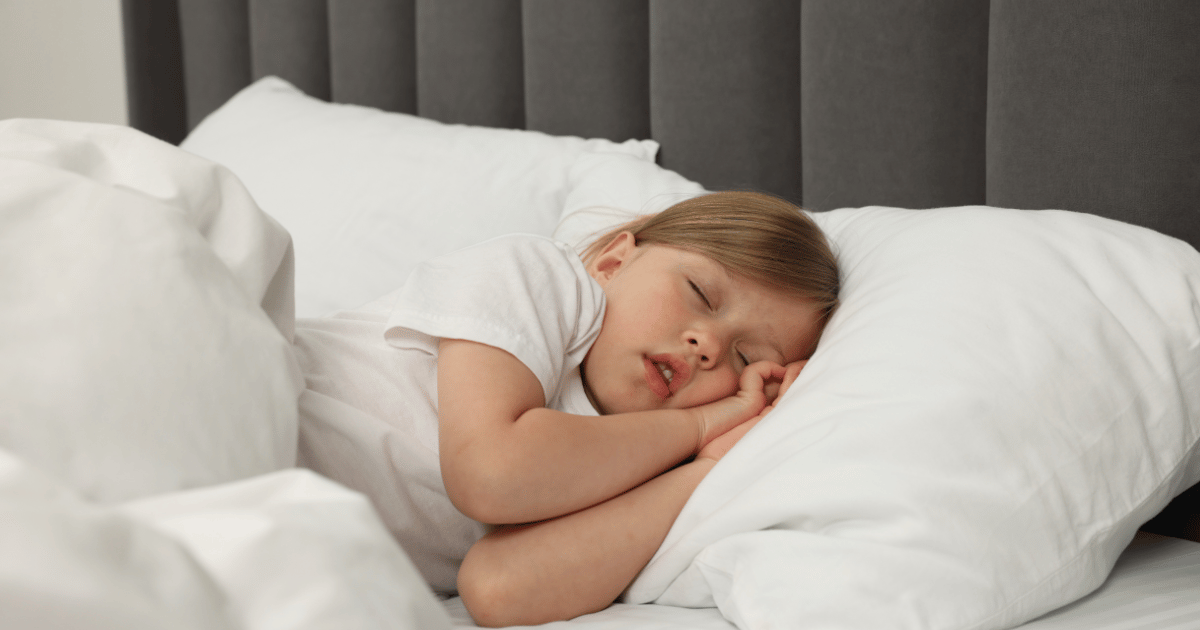
Sweet dreams… except when sharing a room with your child means listening to them thrash around all night, breathing loudly enough to keep everyone awake. You hear them snore, gasp, or toss and turn, and they wake up with dark circles under their eyes saying they’re still tired.
Three words: sleep-disordered breathing.
It’s becoming more common, but it’s not normal and it leaves our kids running on empty.
What Is Sleep-Disordered Breathing?
Sleep-disordered breathing isn’t just being a “light sleeper.” It refers to a spectrum of breathing difficulties that occur during sleep, ranging from mild airway restriction to full obstructive sleep apnea.
You might notice:
- Snoring
- Audible or heavy breathing
- Restless movement
- Night sweating
- Open-mouth posture while sleeping
Why It Matters
Sleep-disordered breathing affects far more than just nighttime rest. Sleep is when the body and brain restore and grow. When breathing is disrupted, everything from development to behavior to overall health can be impacted.
Common symptoms include:
- Frequent waking or restlessness
- Bedwetting
- Hyperactivity
- Attention difficulties
- Crowded teeth or malocclusions
- Inefficient chewing
- Speech or articulation issues
- Narrow palate or facial structure changes
How We Assess
Assessment begins with observation. What do we see and hear?
In the clinic, look for:
- Narrow or high-arched palate
- Open-mouth posture
- Low tongue resting position
- Enlarged tonsils or adenoids
- Dark circles under the eyes
Parents can watch for:
- Snoring, pauses in breathing, or gasping
- Tossing and turning during sleep
- Morning fatigue
- Bedwetting
- Nightmares
- Mouth breathing while asleep
What Treatment Looks Like
Treatment begins with a comprehensive myofunctional therapy evaluation. The goal is to restore nasal breathing and proper oral resting posture through targeted exercises, which in turn supports airway health and restorative sleep.
Often, care involves a multidisciplinary team tailored to each child’s needs. A typical plan may include:
- Myofunctional therapy (ages 5 and up) or feeding therapy (ages 0–4)
- Airway evaluation: Referral to an ENT for assessment of tonsils, adenoids, or chronic congestion
- Airway dentist or orthodontist: To assess and guide palatal expansion for optimal growth and airway development
- Bodywork: OT, PT, or craniosacral therapy to address posture, fascial tension, and overall regulation
Red Flags
Children should be referred for a myofunctional therapy or airway evaluation if you notice:
- Snoring or loud breathing at night
- Restless sleep or frequent movement
- Pauses in breathing during sleep
- Mouth breathing day or night
- Persistent bedwetting
- Hyperactivity or attention challenges
- Malocclusion, crowded teeth, or small jaw
Myths vs. Facts
Myth: Snoring in kids isn’t a big deal.
Fact: Snoring is a major red flag. Children should be breathing quietly through their noses, day and night.
Myth: They’ll outgrow it.
Fact: Sleep-disordered breathing typically worsens without proper intervention.
Myth: If they sleep all night, they must be fine.
Fact: Even if a child sleeps through the night, poor-quality sleep caused by disordered breathing can affect behavior, learning, and growth.
Did You Know?
- Sleep-disordered breathing affects an estimated 1 in 5 children in the U.S.
- Chronic mouth breathing can lead to restless sleep and daytime fatigue.
- Sleep-disordered breathing is diagnosed through a sleep study, usually ordered by a pediatrician or ENT.
Ready to Help Kids Sleep Better?
If you’re ready to confidently screen for sleep-disordered breathing and collaborate with airway-focused providers, you don’t have to figure it out alone.
Join The Myo Membership® for:
- Hands-on training and live office hours
- Case discussions and mentorship from experienced clinicians
- Access to HallieAI, your personal coach for all things myo, tethered oral tissues, and airway
Together, we’ll help you build the skills and confidence to support better sleep, better breathing, and healthier development for every child you serve.